Not known Facts About Radiator Covers
Table of ContentsSome Ideas on Radiator Covers You Need To KnowNot known Facts About Radiator CoversRadiator Covers Things To Know Before You BuyThe 8-Second Trick For Radiator CoversHow Radiator Covers can Save You Time, Stress, and Money.A Biased View of Radiator Covers
Hayden wrote, "Radiators are a good resource of warm, but they likewise take up beneficial square footage ...They may be called radiators, but they should probably be called convectors, since the considering that of mass heat that warmth get from obtain traditional rad standard moved by relocated. In convection, air warmed between the fins of the radiator rises to the ceiling and is pressed around the area in a circle.
How Radiator Covers can Save You Time, Stress, and Money.
Hayden wrote, "Radiator covers with the correct backing can disperse heat much more efficiently than an exposed radiator. Rather than the warmth going directly to the ceiling, the back allows it to be pressed into the home." Lloyd Alter It holds true that radiators should have a correct reflective backing; I make use of foil-faced bubble wrap insulation; it mirrors a little of the radiated warmth that would have been soaked up by the wall back right into the space and the radiator.
Radiator covers can be useful in older structures made after the influenza epidemic of 1918 - radiator covers. Then, as is the instance now, wellness officials thought that fresh air was the way to prevent getting conditions and that people should sleep with open home windows. Dan Holohan creates in "The Lost Art of Heavy Steam Home Heating" that in New York City City, the Board of Health and wellness bought that windows should stay open all the time, and the radiators were designed to maintain structures cozy on the coldest day of the year with the home windows open
Radiator Covers - The Facts
Some radiators, like copper finned modern rads, included important covers, usually with dampers to adjust the convection; they, like vapor rads, need covers because they are too hot to touch. But also for a traditional cast iron rad that a person locates in old houses, linked to a hydronic system, a cover isn't required for security.
In a current post, Holohan kept in mind that some radiators can obtain hazardously warm. He described a lawsuit where a child rolled off the bed and obtained stuck in between the radiator and the bed and endured significant burns. He wrapped up, "If I was a proprietor, I would certainly cover all the radiators in the houses that had children living there.
As a normal heating home appliance, radiators are not there just to look quite but to maintain your home warm utilizing natural convection. Nonetheless, with even more emphasis on interior decoration, these devices can show unsightly and sidetrack from the remainder of the very carefully plotted aesthetics of an area. To straighten a radiator to the style of the remainder of your room, you can cover one up though this does feature ramifications for the heating.
A radiator cover is basically a method of covering up a radiator to obscure it from sight (radiator covers). Timber is considered the most typical product for a radiator click for info cover as it simply looks much better.
Unknown Facts About Radiator Covers
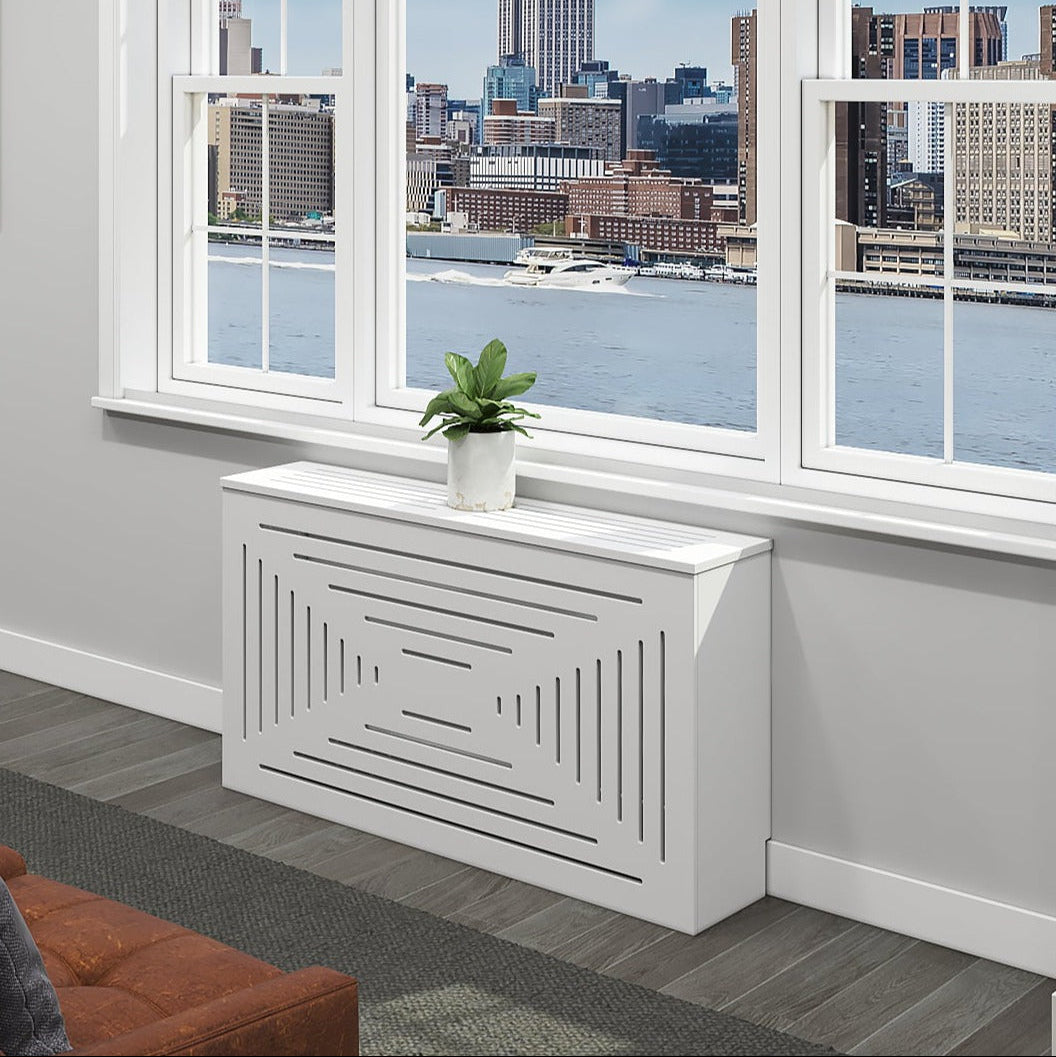
Not only can they childproof the home appliance and add a cosmetically pleasing design, yet a radiator cover can also add extra storage area, particularly in the shower room. With a level surface, you need to be able to keep soaps and scents to keep them within very easy reach. By repurposing the space, the radiator cover can end up being a makeshift mantelpiece.
That is certainly the situation with radiator covers and they can limit the performance of your central furnace. By disrupting the flow of cozy air and the natural convection, you can experience warmth loss and grab the thermostat when you actually need to not need to. Effectively, view it now a radiator cover can cost you money by exceedingly investing in home heating you are not enjoying.
Things about Radiator Covers
These consist of bleeding the radiators, using reflective backing, and keeping a void for the radiator. A lot of families should be bleeding their radiators at the very least as soon as a year.
Radiators function by natural convection, as cool air sinks to the base of the wall surface, it comes into contact with the radiator after that warms up and increases as the air becomes less thick. The cozy air efficiently heats up an area. If you were to place things following to the radiator, such as a sofa, or border one with a radiator cover, after that this would interfere with the natural convection and you would certainly not be able to feel the complete benefits of the home heating.
Radiator covers may be a good alternative if you have young kids running around and need a way of preventing them from melting themselves on the hot surface. While a cover ought to look excellent to hide a radiator, any product that blocks a home heating appliance will certainly reduce its performance. To provide a full design, the radiator cover need to review the shutoffs, along with the heating unit and pipes.
Getting My Radiator Covers To Work

And thats my inquiry: just how do I tackle finding out if my radiators should have covers? I have a close friend that believes the issue is straightforward: a cover catches the warm, so removing the cover will certainly enable the heat to much better enter the area and will make the radiator much more efficient.
Which my concern: how do I set about finding out if my radiators should have covers? I have a pal who thinks the problem is simple: a cover catches the heat, so removing the cover will certainly allow the warmth to much better get in the space and will make the radiator extra effective.
Which my question: just how do I deal with figuring out if my radiators should have covers? I have a friend that thinks the concern is easy: a cover catches the warm, so eliminating the cover will permit the heat to far better enter the space and will make the radiator a blog here lot more efficient.
Comments on “The 6-Second Trick For Radiator Covers”